The Crust of Two Worlds | 两界之皮
The aroma of warm, spiced dough hung heavy in the air of Córdoba, a scent that had traveled across the Strait of Gibraltar. This was Al-Andalus, a land where cultures intertwined like the intricate patterns of a Moorish tile.
温热且带辛香的面团香气弥漫在科尔多瓦(Córdoba)的空气中,这股香气曾跨越直布罗陀海峡而来。这里是安达卢斯(Al-Andalus),一个文化交织如摩尔纹砖般绚丽的土地。
The Ancestor | 祖先
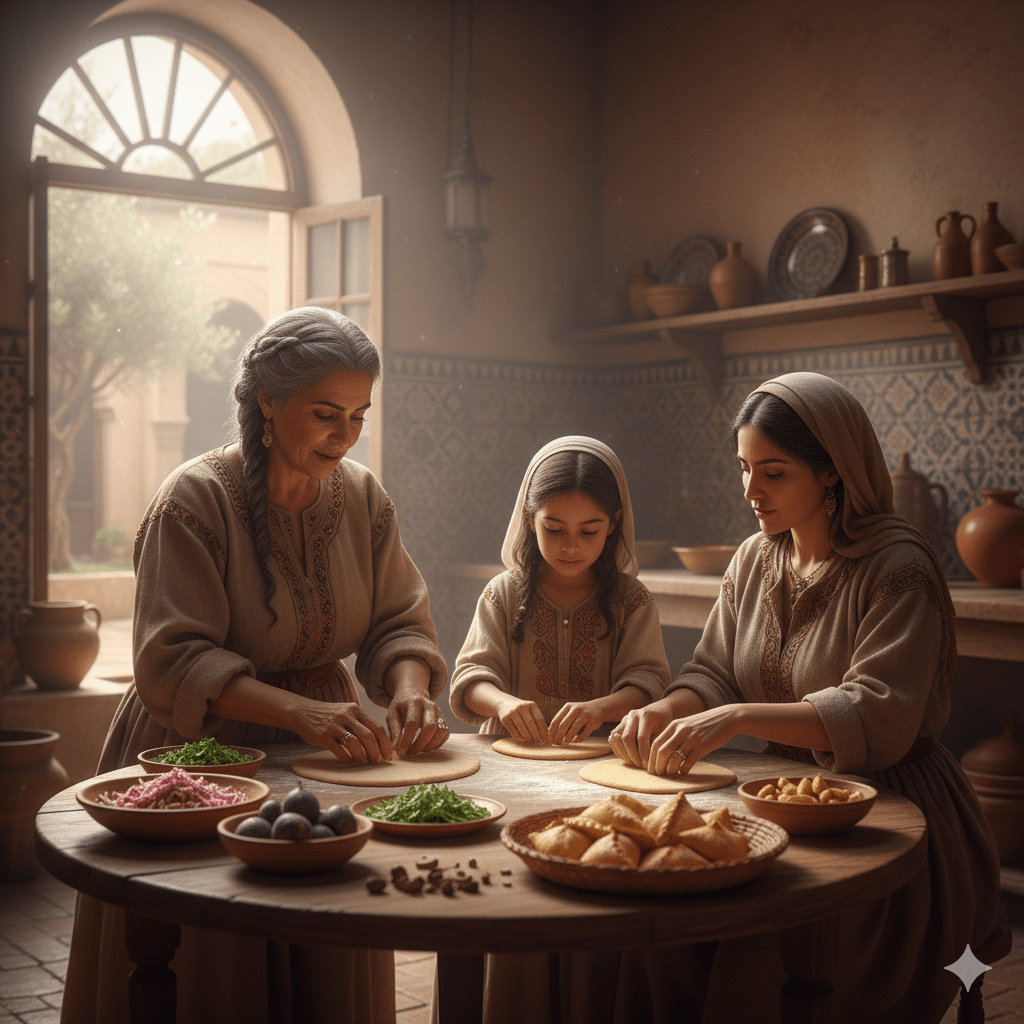
Our story begins not with an empanada, but with its ancestor: the fatayer, a savory pastry brought by the North African Moors. In the sun-drenched kitchens of Morocco, women kneaded dough made from semolina and olive oil, filling it with spiced lamb and onions.
我们的故事并非始于恩潘纳达(empanada),而是源自它的祖先:由北非摩尔人带来的咸味糕点——Fatayer。在摩洛哥阳光充沛的厨房里,妇女们用粗粒小麦粉和橄榄油揉制面团,里面包裹着调味的羊肉和洋葱。
The Arrival | 抵达
In the year 711, as the Moors established their presence in Hispania, their food began to blend with the existing Roman and Visigothic traditions. The fatayer, with its convenient, portable form, quickly found favor among the locals.
公元711年,随着摩尔人在西班牙定居,他们的食物开始与当地的古罗马和西哥特传统融合。Fatayer 凭借其便于携带的形式,迅速赢得了当地人的喜爱。
The Evolution | 演变
Spanish cooks began to adapt the recipe. They used wheat flour and filled them with seafood from the coast or cured meats from the plains. The name itself transformed, reflecting the Spanish verb empanar, meaning “to wrap in bread.”
西班牙厨师开始改良配方。他们改用小麦粉,并塞入沿海的海鲜或平原的腌肉。它的名字也发生了变化,源自西班牙语动词 empanar,意为“用面包包裹”。
A Shared Spice: The cumin, parsley, and paprika within the dough remained a testament to their Moorish origins.
共同的辛香:面团中的孜然、欧芹和辣椒粉,都印证了它们源自摩尔人的传统。
The Legacy | 传承
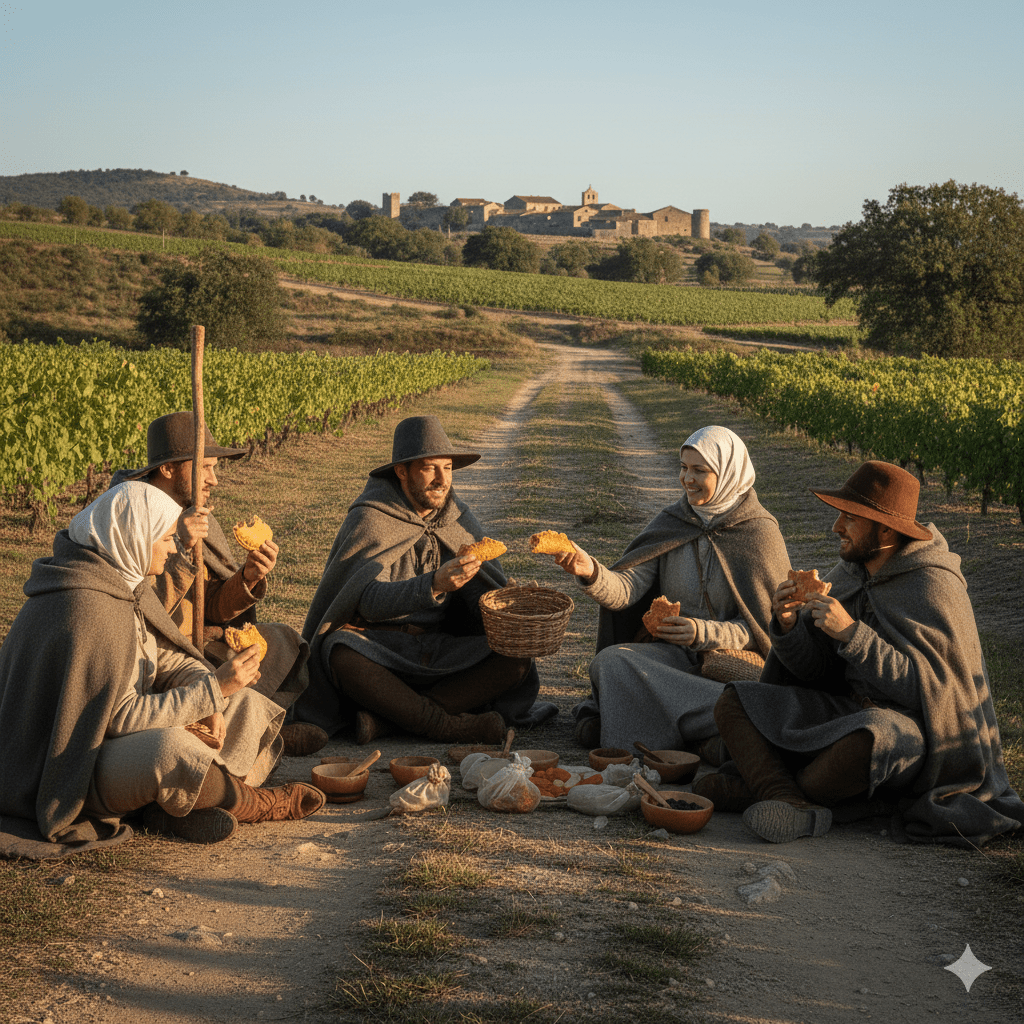
Today, the empanada is a symbol of a shared history. Whether in Seville or Fez, you taste the echoes of a shared past—a reminder that the most beautiful traditions are born from the blending of cultures.